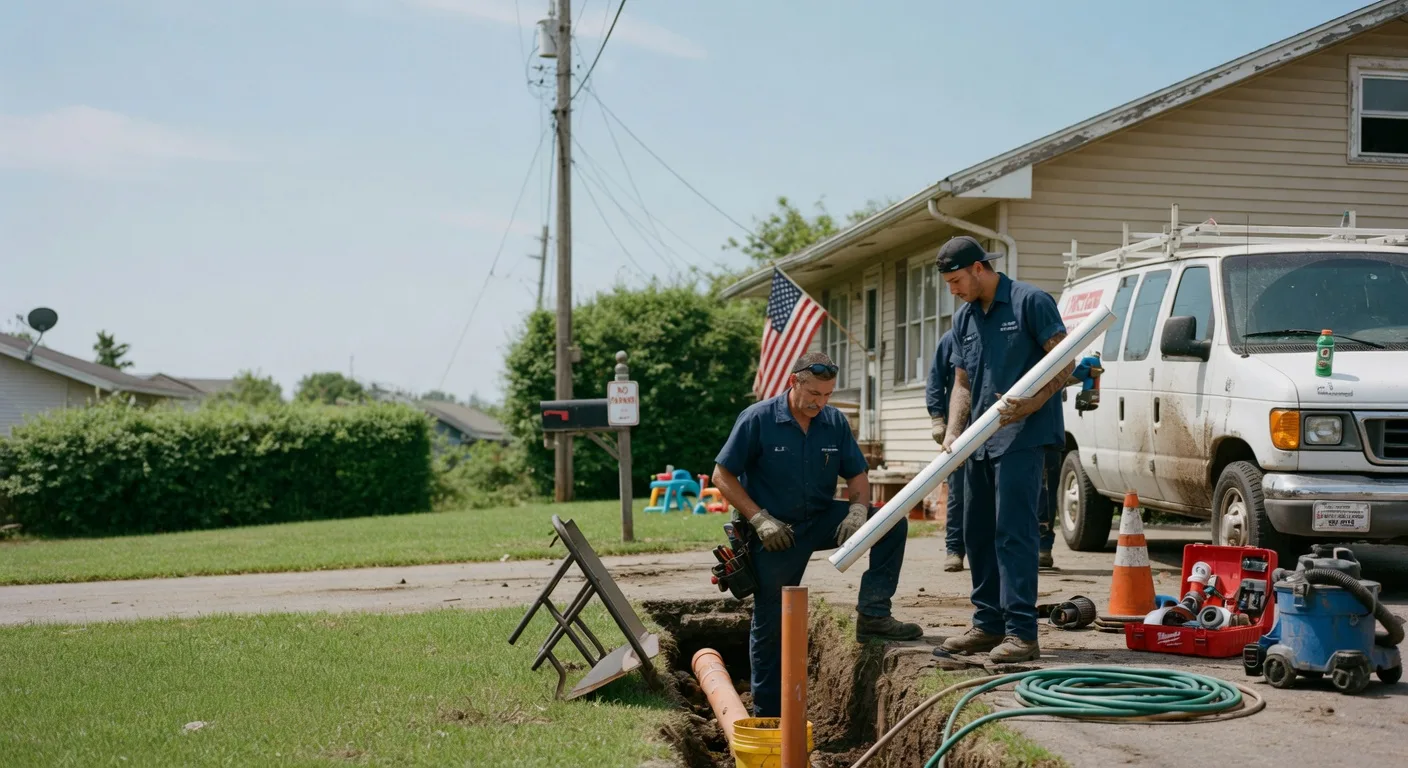
Why does my house smell like sewage even though nothing is backed up?
A sewer smell with no visible backup usually means sewer gas is getting into the house through a path other than a clog. The most common cause is a dry trap. Every drain has a U-shaped trap that holds water as a seal, and in a rarely used drain, like a basement floor drain or a guest bathroom, that water evaporates. Pouring a bucket of water down the drain refills the seal, and it often fixes the smell in minutes, so that is a safe homeowner check. A loose or failed wax ring under a toilet can leak gas at the base, and a rocking toilet is a clue. A cracked vent pipe in the attic or wall can release gas inside the house. Outside, a damaged sewer line or an open cleanout can send the smell into the yard and then indoors. If the smell is strong, comes with slow drains, or you feel dizzy or sick, leave the area and call right away. If it lingers after you refill the traps, the vent stack or the sewer line itself may need a camera check. Call Expert Plumbers Co at (380) 262-9173 to get connected with an independent local plumber in Denison, IA.
One thing worth knowing is that the smell often follows a pattern, and the pattern points to the source. If it is strongest right after you run a shower or flush a toilet, the gas is probably escaping from a leaking drain joint or a cracked vent inside a wall. If it comes and goes with the weather, a low-pressure day or strong wind can pull gas back down a vent. In older homes, deteriorated cast iron or lead-and-oakum joints are common leak points. Newer homes with plastic pipe more often have a missed glue joint or a dried trap. When you talk to the plumber, say which room the smell is in, what time of day it shows up, and whether it changes after water use. That detail can save an hour of searching. Expect the fix to be small if a trap or wax ring is the cause, and larger if a wall has to be opened to reach a joint.
Why does my basement floor drain back up when it rains?
A floor drain that backs up when it rains is usually not a clog in the drain itself. It means the sewer line outside the house is full, and the water has nowhere to go but up through the lowest opening, which is your basement floor.
Heavy rain can push extra water into the main line through cracked joints, root intrusion at a clay joint or a failed sewer lateral. The line fills, and the floor drain shows it first.
Safe homeowner check: on a dry day, pour a bucket of water into the floor drain and see if it runs away normally. Keep stored items off the floor, and do not run the washer, showers or dishwasher during the storm.
Stop running water and call now if sewage is rising, the smell is strong, or every drain in the house is gurgling or backing up. That points to the main line, not one fixture.
A cable machine can clear roots or grease when a blockage is the cause. If the line keeps filling in wet weather, a camera inspection is the next step, because it shows whether the pipe is cracked, bellied or breached. Hydro jetting washes the pipe wall once the cause is known. Cost depends on access, how much has to be opened up, the materials involved and any permit requirement.
Expert Plumbers Co is a referral service. Call (380) 262-9173 and we will connect you with a plumber serving Denison, IA for Emergency Drain Cleaning or a camera inspection.
Pay attention to how fast the drain responds, because it tells you how serious the cause is. If the water rises within minutes of a downpour starting and drops soon after it ends, the line is being overloaded by water entering through cracks or joints. If it stays up for hours after the rain stops, something is also holding water in the pipe, such as a belly or a root mass. Older homes often have clay or cast iron lines with many joints and sometimes a downspout or foundation drain connected to the sewer, which makes wet-weather backups more likely. Newer homes with plastic pipe usually have fewer joints, so a backup there points more strongly to a blockage or a municipal main running full. Tell the plumber when the backups began, how heavy the rain was, and whether any gutters or sump discharge are tied into the house drains. Once the cause is fixed, the floor drain should stay quiet through storms.
Sewage has backed up into my basement. What do I do right now?
Stop running water in the house now. That means toilets, sinks, showers, the washing machine and the dishwasher. Every gallon you send down the line has nowhere to go but out through the lowest opening, which is your basement floor drain.
Stay out of the water. Keep children and pets away. If you must go in, wear boots and gloves, and do not touch outlets or appliances while standing in it. Do not pour chemical cleaners down any drain.
One safe check: look at whether other drains upstairs are gurgling or slow. If they are, the main sewer lateral is blocked or failing. Typical causes are root intrusion at a clay joint, grease build-up on the pipe wall, a bellied line holding water, or a collapsed section. A single slow fixture is a branch line problem. A basement backing up with the whole house affected is a main line problem, and it needs different equipment.
This is Emergency Drain Cleaning, and it is not a homeowner job. A cable machine at the cleanout can clear a soft blockage. Roots and grease usually need hydro jetting, and a camera inspection shows why the line stopped.
Cost depends on cleanout access, what is found in the pipe, how much has to be removed or repaired, and any permit requirement. Expert Plumbers Co is a referral service. Call (380) 262-9173 and we will refer you to a plumber serving Denison, IA.
Once the water is stopped, take photos of the water line and the affected items before anything is moved, and write down the time you first noticed it. If the backup is sewage, do not use a wet vacuum or a household fan on it, and do not start throwing out porous items until the plumber has opened the line. Tell the plumber what ran just before the backup, such as a load of laundry or a long shower, and whether the floor drain or a basement toilet was the first place it showed. In an older home with a clay or cast iron lateral, the cause is often roots or a collapsed section. In a newer home it is more often a belly, a joint that was set poorly, or a heavy wipe or grease blockage. After the line is cleared, the floor and walls still need proper cleaning and drying, and that is separate from the plumbing repair.
Our older house has a house trap, or running trap, in the basement. Why does it keep clogging?
Your basement drain backs up every so often, and each time someone points at the house trap and clears it again. In an older house that is a familiar story.
A house trap, also called a running trap, is a U-bend on the main drain near the foundation wall, with two cleanout plugs. It holds water to keep sewer air out. The trouble is that the dip slows the flow and gives solids a place to settle. Paper, grease, wipes and roots that pass through a straight pipe pile up in the bottom of the bend, so the trap becomes a frequent stoppage point.
Old lines make it worse. Scale in cast iron roughens the pipe and catches debris before it reaches the trap. Root intrusion at a clay joint outside sends fibres toward it. A bellied line downstream can hold water back so the trap never fully clears. Many traps were removed over the years, and local code on keeping or removing one varies.
One slow fixture is usually its own branch problem. If toilets, tubs, sinks and the washer all slow down together, or the floor drain bubbles, the trap or the main beyond it is the likely spot.
Safe homeowner check: Stop using water and look at the two trap plugs without opening them. Check whether the floor drain is holding water, and note which fixtures back up first.
Stop running water and call now if sewage is coming up from a floor drain or shower, if you smell sewage in the basement, or if a plug is weeping. Never loosen a trap plug under pressure, because sewage can surge out.
A cable machine is often enough to clear the trap itself when the stoppage is soft. Hydro jetting is the better choice when grease or scale lines the pipe on either side. A camera inspection is the right step when the trap keeps clogging, because it shows whether the real fault is a belly, a root-filled joint or a failing section further down.
Expert Plumbers Co is a referral service. We connect you with an independent local plumber in Denison, IA. Call (380) 262-9173.
Ask whether the trap can stay and be cleaned when needed, or be removed where code allows. The scope depends on basement access, the condition of the pipe on both sides, how much floor has to be opened up, and any permit or code requirement for changing the main.
Our cabin or second home sat empty for months and now the drains smell and run slowly. Why?
You open the cabin for the first time in months and the drains smell like a sewer and the water creeps away.
Every fixture has a trap, the curved section that holds a little water to block sewer gas. With no use, that water evaporates. Once the seal is gone, gas comes straight up the drain. The film left in the pipe also changes while the house sits. Soap, grease and food residue dry and harden on the pipe wall, so the first heavy use narrows the line and water slows down. Then there is the line itself. A vacant house can still have roots working into a clay or cast iron joint, and nobody was flushing them back with daily flow.
If one sink or tub is slow and the others are fine, the problem is probably local to that fixture, its trap or its branch line. If every drain is slow, several fixtures gurgle, or the toilet bubbles when you run the washer, the blockage is further down, in the main line or the lateral to the street.
Safe homeowner check: run water in every fixture for a couple of minutes, including rarely used ones, to refill the traps. Pour a cup of water into floor drains. If the smell fades and the flow picks up after a day or two of normal use, dried traps and loosened residue were likely the whole story.
Stop running water and call now if wastewater comes up in a tub, shower or floor drain, if the toilet will not clear, if the smell stays strong after the traps are filled, or if you see wet floors, stained ceilings or sagging drywall.
A cable machine is enough when the clog is residue or a soft plug in one branch. If the line stays slow after cabling, if roots are suspected, or if grease has coated the full pipe wall, the plumber will usually recommend hydro jetting, which scours the pipe wall with high pressure water. A camera inspection settles the question of roots, a belly holding water, or a failed lateral.
Expert Plumbers Co is a referral service. We connect you with an independent local plumber in Denison, IA. Call (380) 262-9173.
Before you book, tell the plumber how long the house sat empty, whether it was winterized, and which drains are affected. Ask whether they plan to cable, jet or run a camera first, and what they will do if the camera shows roots or a damaged section. The scope depends on access to the line, the parts or pipe needed, how much has to be opened up, and whether a permit or code step applies to a repair.